

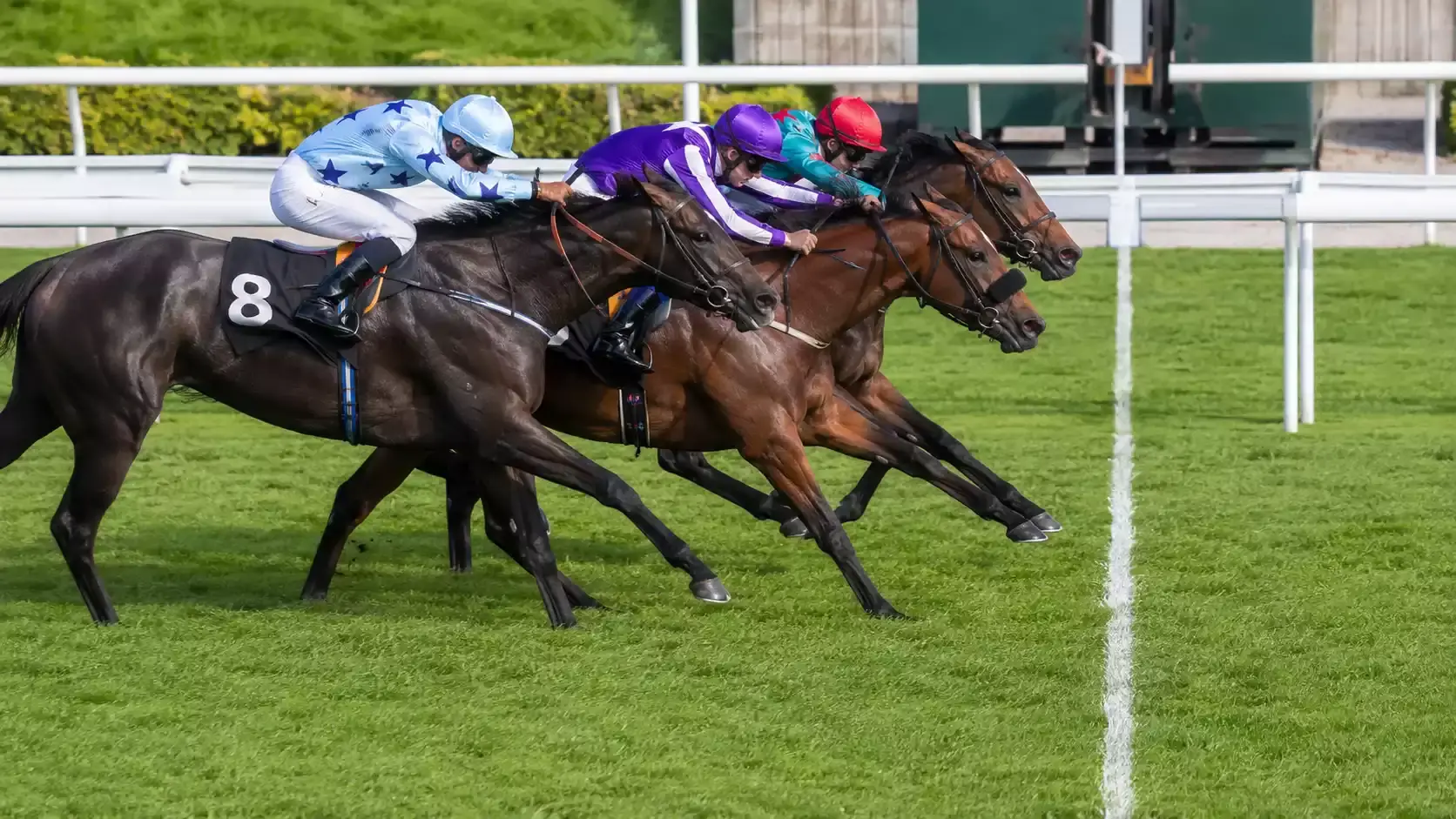
The most satisfying betting slip I’ve ever held came home on a tricast at a Wolverhampton evening meeting in 2019. Modest stakes, an 8-runner sprint handicap, three horses I’d settled on after about forty minutes of form work. The dividend came back at just over 380 pounds for every pound. I’d been confident enough about the trifecta order to put the bet on. I wasn’t confident enough to remember to take a photo of the slip before I cashed it.
That bet sums up why exotic wagers exist as a category. Forecasts and tricasts hand you genuine upside on relatively small stakes, but the maths underneath them is unforgiving. You don’t just need to find the winner — you need to predict the precise finishing order of the first two or three home. This guide is about the mechanics that determine when those bets are worth placing and when they’re a tax on optimism.
Straight Forecast vs Reverse Forecast
A straight forecast asks one question: which horse finishes first and which finishes second, in that exact order? You name horse A to win and horse B to be second. If they cross the line in that order, the bet wins. Any other result loses.
The reverse forecast doubles the bet. You name two horses and the bet covers both possible orderings — A first then B second, and B first then A second. The stake doubles too. A pound reverse forecast costs you two pounds because you’ve placed two straight forecasts, one on each ordering. If either combination comes home, you collect the dividend for that specific outcome.
The dividends are calculated by a computer formula rather than fixed odds. The Computer Straight Forecast — the CSF — is the industry-standard calculation used by the British Tote and applied across most UK bookmakers. The formula factors in the SP of the two horses involved, the field size, and an internal weighting that reflects how unlikely the specific finishing order was. A long-priced winner paired with a longer-priced runner-up produces a large dividend. Two favourites finishing in the expected order produces a small one.
The market structure makes this clearer. Across UK horse racing, win-only bets account for about 36% of all betting activity, each-way bets 22%, and forecasts and tricasts together capture roughly 17% of the market. That’s a substantial chunk of UK punting concentrated in exotic exact-order wagers, which tells you something about the appeal of the format and the size of the recreational interest. The recreational money is what makes the dividends generous on outsider finishes — sharp money rarely concentrates in straight forecast markets because the edge is hard to extract systematically.
The practical question for any individual race is whether you can identify two horses you’re confident enough about to predict their relative finishing order. Most punters can’t, even on small fields. The two-three reverse forecast on a 12-runner handicap is approximately the same intellectual exercise as picking the winner blindfolded.
Tricast Bets: Picking the First Three in Order
The tricast is the straight forecast’s bigger sibling. Name three horses, in finishing order, for the first three positions. Get the order right, collect the dividend. Get any of the three positions wrong, lose the stake.
The dividends scale up dramatically from forecast levels. A tricast on a sprint handicap with mid-range prices throughout often pays in the hundreds for every pound staked. Tricasts on big-field handicaps with longer-priced runners involved can pay in the thousands. The Computer Straight Tricast formula — CST in the dividend tables — works on the same principles as the forecast version but with three runners and an additional layer of multiplication for the third place.
Tricast markets aren’t offered on every race. The standard UK requirement is a minimum of eight runners for the tricast market to open. Below that, the field is considered too small to produce a fair dividend distribution. Some operators apply tighter minimums on lower-grade meetings. The minimum runner requirement matters because it concentrates tricast availability on the bigger, more competitive races where the dividends are most attractive — but where the prediction task is also genuinely difficult.
The reason I rarely place a tricast in races with short-priced favourites is straightforward. If the favourite is genuinely the most likely winner, the dividend on a tricast where it finishes first is compressed by the formula. The big dividends come from tricasts where the favourite finishes second or third, or doesn’t place at all, and an outsider takes a key position. Building a tricast around a short price almost guarantees you a small return even if you nail it.
Combination Forecasts, Tricasts and Cost Calculations
This is where the maths becomes properly punishing if you don’t watch the stake sheet. A combination bet covers all possible finishing orders among a selected group of horses. Pick three horses for a combination forecast and you’re covering six different one-two combinations — every possible ordering of the three across the first two positions. Pick four horses and you’re covering twelve combinations. Five horses, twenty combinations. The formula is N times N-minus-one for forecasts.
Tricasts scale even faster. A combination tricast on three horses covers six possible one-two-three orderings. On four horses it covers 24. On five horses, 60. The formula is N times N-minus-one times N-minus-two. A casual punter ticking five boxes for a combination tricast at one pound per line is staking 60 pounds, not five.
This sounds obvious written down. In the heat of the moment at a busy festival meeting, with a 16-runner handicap looking impossible to call between a half-dozen serious contenders, it is remarkably easy to construct a combination tricast that costs three figures before you’ve noticed. Always look at the total stake displayed on the slip, not at the per-line cost.
The wider context for these costs matters too. Total UK horse racing betting turnover fell by 4.3% over 2025 and is down 10.3% over the previous two-year window, with the largest declines concentrated on core fixtures rather than the headline meetings where exotic bets do most of their volume. The compression in the recreational market means the pool of casual punters placing wild combination bets is smaller than it was three years ago, which has tightened the dividend distribution on the largest exotic payouts. The headline jackpots still happen, but the median tricast dividend on a competitive race is more compressed than it used to be.
The cost-control discipline I’ve settled on is to cap combination forecasts at three horses — a 6-line bet at any chosen unit stake. Combination tricasts I cap at four horses unless I have an extraordinarily strong view, which gives me 24 lines and forces me to keep the unit stake small. Beyond that the maths runs away from any realistic expected return. If the dividend on a long-shot tricast is genuinely 800 pounds for a pound, covering 60 combinations to chase it costs 60 pounds and effectively shrinks the implied price to under 14/1 for a result you considered improbable enough to need 60 lines of cover. That isn’t value any more.
The cleaner approach, when you’ve genuinely got a strong opinion, is a small number of single tricasts on the specific orderings you actually believe in, rather than a combination that hedges across orderings you don’t. The dividend per unit stake on a single tricast is the dividend, full stop. On a combination, you’re collecting the dividend on the one ordering that won and losing your stake on every other line. The arithmetic only works if your conviction is genuinely spread across multiple plausible orderings. If it isn’t — and on most races it isn’t — you’re paying for cover you don’t need. For the underlying odds maths that drives all of these calculations, my breakdown of how UK horse racing odds work in fractional and decimal formats covers the conversion arithmetic that sits beneath every exotic bet dividend.
