

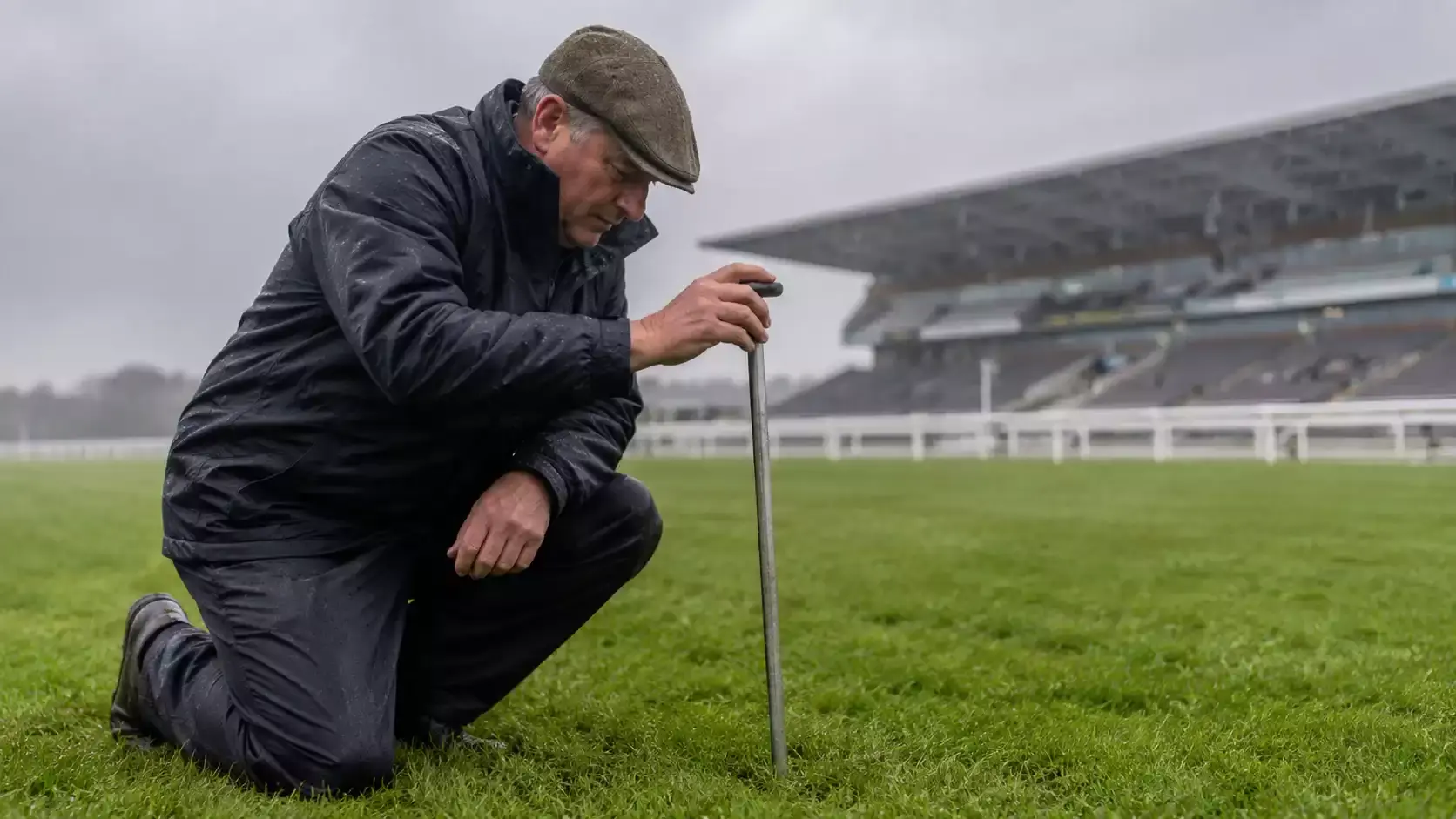
Cheltenham, March 2018. The famous Festival mud. I’d built an ante-post position around what was, at the time, a hyped novice hurdler from a leading Irish yard. The horse had won all four of its preceding races on good ground. The going on the day was officially soft, heavy in places. He trailed in twelfth, never travelling. I watched it happen and learned a lesson that has stayed with me since: a horse’s going profile is not negotiable. The market knows it. The trainers know it. The horses know it. The punter who ignores it pays the tuition fee.
Going is the single most under-discussed factor in casual horse racing betting. It barely features in the headline analysis that recreational punters read in the run-up to races. But it sits underneath the form line of every UK horse and explains a meaningful portion of why the same horse can run a stone better at one meeting than at the next. Understanding the going scale, knowing how to find ground preferences in form data, and recognising the all-weather surfaces as a distinct category is foundational to reading any racecard properly.
Turf Ratings: The Official Going Scale From Firm to Heavy
The official UK going scale runs from firm at one end to heavy at the other, with a series of intermediate descriptors filling in the spectrum. The full scale is firm, good to firm, good, good to soft, soft, soft to heavy, heavy. Each descriptor reflects a specific moisture content range and a specific feel underfoot, measured by the clerk of the course on race morning using a combination of the going stick and walked inspection.
Firm going is dry, fast, with minimal give in the turf. Times tend to be quick, races tend to favour speed merchants, and the risk of leg injuries rises because the impact through the limb is less cushioned by the ground. Top-level connections often pull elite horses on firm going, particularly the most valuable Group performers, because the welfare risk outweighs the prize-money upside.
Good to firm is the standard summer turf condition in the UK — slightly more give than firm but still relatively fast. It is the most common official going for Flat racing in dry summer weather and produces the most consistent times.
Good is the centre of the spectrum and is generally considered ideal for most horses. It offers enough give to be safe and to suit a wide range of running styles, without becoming heavy enough to disadvantage horses without specific soft-ground aptitude. The phrase “true running” is sometimes used informally to describe results on good going because the form is least distorted by extreme conditions.
Good to soft introduces meaningful give in the turf. Times slow. Horses that prefer cushioned ground come into their own; horses that need fast ground start to find the going against them. The transition from good to good-to-soft is where the form book starts to diverge from its summer baseline.
Soft and heavy are where the going becomes a dominant factor in race outcomes. Heavy ground, in particular, is a stamina and constitution test rather than a speed test. A horse that has never won on heavy ground is statistically unlikely to start winning on heavy ground now. The horses that thrive in these conditions are usually specifically identified by their connections and campaigned at meetings where the heavy going is likely.
UK racecourse attendance hit 5.031 million in 2025, the first time it has crossed the 5 million threshold since 2019. The weather pattern across that season included an unusually wet autumn and a relatively dry late spring, and the going variation across the calendar was substantial enough that race-by-race form interpretation required careful weighting of which conditions the form had been built on.
How Ground Preferences Show Up in Form Data
Identifying ground preferences from a horse’s form line is a learned skill rather than an obvious read. The form line itself shows finishing positions; the ground each race was run on is not visible from the figures alone. You need to look at the underlying race details, which any decent form service displays alongside the headline form.
The pattern to look for is consistency of strong performances on particular going descriptors. A horse whose three best runs in its career were all on soft or heavy ground is telling you something about its preferred profile, even if the going descriptors on the other runs in its record were mixed. Conversely, a horse whose record falls apart on anything softer than good is a horse you’d be cautious about backing in muddy conditions.
Trainer entries are an underused supplementary signal. Trainers who know their horses well tend to enter them at meetings where the forecast going matches the horse’s preferences. A leading yard targeting a specific big-field handicap in autumn often suggests the going forecast for that meeting fits the horse’s profile. Conversely, a horse entered at a meeting with going that historically doesn’t suit it raises a question about whether the entry is a serious tilt or a precautionary stake.
The UK horse racing turnover figures matter to this kind of analysis because they reveal where the recreational market is paying attention. Q1 2025 turnover was down 9% year on year, with the steepest drops on core fixtures and the lowest declines on premier meetings. Premier-fixture going analysis benefits from sharp market liquidity and reasonably efficient pricing; core-fixture going analysis sometimes produces value because the recreational money hasn’t fully discounted ground preferences in the prices.
The other piece of form data that helps interpret going is the running style. A front-running horse on heavy ground often suffers more than a hold-up horse on the same surface, because the heavy ground takes more out of the horse running freely on the lead. The hold-up runner can preserve energy and find more once the leaders begin to feel the ground. This running-style effect compounds with the basic ground preference signal and can change the picture of who you back even before considering the runners’ nominal preferences.
All-Weather Surfaces and How They Differ From Turf
All-weather racing — held on synthetic surfaces — is its own ecosystem within UK Flat racing and deserves treatment as a separate category rather than as an extension of turf form. The UK has multiple all-weather tracks, primarily using Polytrack or Tapeta surfaces, with each surface type having its own characteristics and its own form-translation rules.
Polytrack — used at Lingfield and several other tracks — is a wax-coated sand-fibre mix that provides a relatively consistent racing surface across weather conditions. Tapeta — used at Newcastle, Wolverhampton, Newmarket and Southwell — is a different proprietary synthetic with subtly different characteristics. Horses’ form on one surface doesn’t translate cleanly to the other; specialists in one synthetic don’t always perform on the alternative.
The most important rule of all-weather form interpretation is that turf form and all-weather form are not interchangeable. A horse with strong turf form in summer doesn’t necessarily reproduce that form when switched to all-weather racing in winter. Some horses prefer the cushioned consistency of synthetic surfaces and run noticeably above their turf form on them. Others find the kickback and the different stride dynamics counterproductive and run below their turf level. The all-weather form line should be read as a separate record, not as a continuation of the turf record.
The going variation on all-weather is meaningful but compressed. Synthetic surfaces are described as standard, standard to slow, or slow, with a much narrower variation across the year than turf going experiences. Standard going on a synthetic is the baseline; slow is what happens when the surface has been heavily watered or weather conditions have softened it. The form translations between standard and slow on the same synthetic are smaller than the equivalent firm-to-heavy translations on turf, but they exist and matter for serious all-weather form analysis.
The wider context of going analysis sits within the broader picture of how form data combines with race-specific factors to produce price-relevant judgments. The going profile of a horse is one of several inputs that determine whether the prices on offer represent value. For the wider analytical framework, my guide on reading a UK horse racing form guide in detail covers how going slots in alongside the other form indicators on a racecard.
