

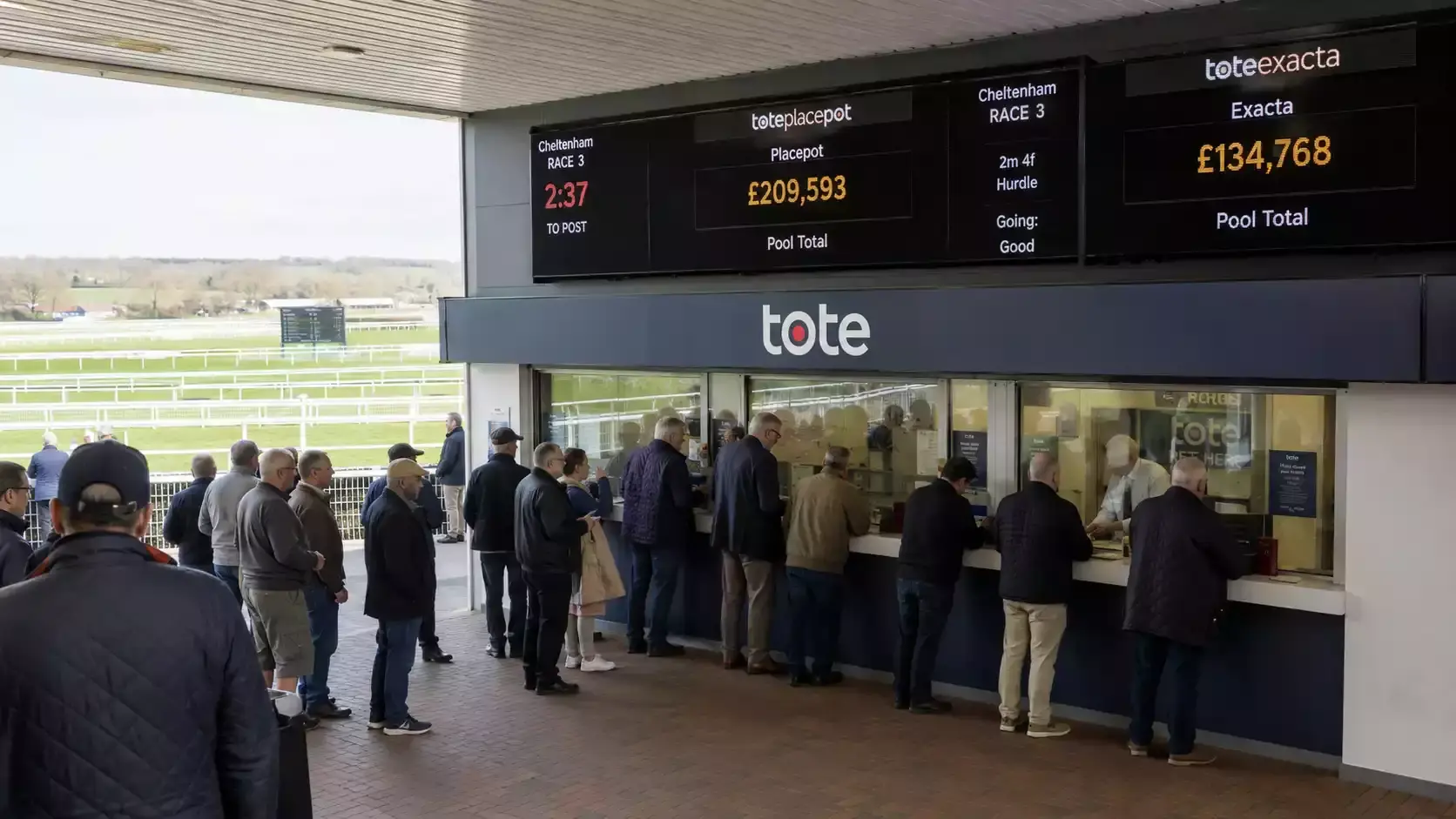
The first time I cashed a Tote win ticket on a long-priced winner I genuinely thought the cashier had made a mistake. The horse had returned an SP of 14/1 at the bookmakers. The Tote win dividend was over 22/1 equivalent. The cashier saw me hesitate and explained, as if to a small child, that the Tote pays on the pool, not on the SP. That was the moment pool betting started to make sense to me as something other than a quaint relic of pre-online racing.
The Tote sits as a structural curiosity in the UK horse racing market. Pari-mutuel betting — the pool-based system the Tote uses — accounts for only around 5% of total UK horse racing betting turnover. The other 95% is fixed-odds bookmaker betting. But within that 5%, there are specific situations where pool betting consistently beats fixed odds, and the punters who know when to use which platform extract value from both. This is a guide to the structural differences.
Pool Dividends: Pari-Mutuel Mechanics and Split Ratios
The fundamental difference between Tote and bookmaker betting is who you’re betting against. With a bookmaker, you bet against the bookmaker. They’ve offered you a price; if the horse wins, they pay the price. With the Tote, you bet against every other Tote bettor on the same race. All stakes go into a single pool. The Tote takes its operating margin off the top. What’s left is divided among the winning tickets.
This sounds abstract until you work through a specific race. Say the Tote win pool on a six-runner Wolverhampton race totals 100,000 pounds across all bettors. The Tote margin is around 19% on win bets, so the surviving pool is about 81,000. Of that, suppose 20,000 has been backed on the winning horse. The dividend per pound of winning stake is 81,000 divided by 20,000, which equals 4.05. So a one-pound win ticket returns 4.05 pounds, including the returned stake. That’s equivalent to fractional odds of about 3.05/1, or decimal 4.05.
Now apply the same race to a fixed-odds market. The bookmaker would have priced the horse at whatever SP the on-course market settled on — let’s say 7/2, which is decimal 4.5. A 1-pound bookmaker win bet would have returned 4.50. In this specific case, the bookmaker beat the Tote. The pool money concentrated on the winner and compressed the dividend below the SP.
Reverse the example. The same 100,000-pound pool, but this time only 5,000 is backed on the winning horse. The dividend is 81,000 divided by 5,000, which equals 16.20. A 1-pound win ticket pays 16.20. The fixed-odds SP on the same horse might have been 14/1 — decimal 15.00. In this case, the Tote beat the SP because the pool money concentrated on horses that didn’t win, leaving disproportionate share for the winning ticket.
The structural pattern that emerges is this: the Tote beats fixed odds when the winning horse is one that the pool has underbet relative to the fixed-odds market. The Tote loses to fixed odds when the winning horse is one the pool has overbet. Casual recreational money tends to concentrate on favourites and on horses the racing media has profiled, leaving outsiders proportionally underbet in the pool. This is why long-priced winners tend to pay better on the Tote than at SP.
Tote Guarantee and When Pool Odds Beat Fixed Prices
The Tote Guarantee is the feature that genuinely changes the punter’s calculation between pool and fixed-odds betting. The Guarantee promises that on qualifying races, the Tote win dividend will match the SP on the winning horse, no matter what the pool maths actually produces. If the pool dividend would have been lower than SP, the Tote pays the SP equivalent. If the pool dividend is higher than SP, the Tote pays the higher pool dividend. The bettor gets the better of the two outcomes.
This is a substantial value proposition because it converts the Tote from a “sometimes beats SP, sometimes worse” proposition into a “matches SP at worst, beats SP often” proposition. On every race covered by the Tote Guarantee, taking a Tote win ticket is mathematically at least equivalent to taking the SP, with upside when the pool maths produces a higher dividend.
The Guarantee doesn’t apply to every race. The standard coverage includes all UK and Irish handicap races above a certain class threshold, plus most televised meetings. Lower-class non-handicap races and minor midweek fixtures sit outside the Guarantee at most operators. The full coverage map varies between Tote-affiliated platforms and is worth checking on whichever platform you’re using.
The wider context of the UK betting market matters here too. Remote betting GGY in the UK sits at 2.6 billion pounds annually, with horse racing accounting for 766.7 million of that figure. The horse racing slice of remote betting has been under pressure across recent years — turnover down 9% year-on-year in early 2025 — and one of the consequences has been a narrowing of the gap between Tote and fixed-odds value on competitive markets. When fixed-odds liquidity tightens, the SP becomes a less aggressive market reference point, and the Tote Guarantee becomes a more attractive structural feature for punters who want a defined floor on returns.
The races where the Tote routinely outperforms fixed odds are the long-priced winners in handicaps. The bigger the field, the more competitive the race, the more likely the recreational pool money has concentrated unevenly across the field and left structural value on a long-priced runner the broad market didn’t favour. The Tote also tends to beat SP on horses whose support comes from on-course or specialist pool punters rather than from the wider fixed-odds market, which has its own informational signature.
Tote Bet Types: Win, Place, Exacta, Scoop6
The Tote operates a portfolio of bet types that extends well beyond the basic win and place pools. Each one has its own pool, its own margin take, and its own dividend logic. Knowing the structure helps you decide which suits which kind of race.
The Tote Win and Tote Place bets are the foundations. Win pays out on first place only; Place pays out on the first three in races of eight or more runners, the first two in races of five to seven, and on the winner only in races of four or fewer. The Place pool has a higher margin take than the Win pool, around 27% in standard Tote operation, because the bookmaker liability is spread across more outcomes and the operator needs to recover its costs across a wider distribution.
The Tote Exacta is the pool equivalent of a straight forecast — naming the first and second in correct order. The Exacta pool has its own margin and its own dividend distribution; like the Win pool, it can outperform fixed-odds CSF dividends when the winning combination is one the broader pool money has underbet. Exacta pools on televised meetings reach substantial size and produce competitive dividends.
The Tote Trifecta covers the first three in correct order — analogous to a fixed-odds tricast but with pool-based dividend logic. Trifecta dividends on competitive handicaps can be dramatic when an outsider takes a key position. The Scoop6 is the marquee Tote bet, requiring punters to pick the winners of six selected high-profile Saturday races, with a guaranteed minimum jackpot pool and a rolling carryover mechanism that produces seven-figure jackpots periodically.
The structural lesson across all of these is that pool bets reward situations where the recreational money has positioned itself badly. The bigger the gap between the betting public’s collective opinion and the eventual outcome, the better the Tote dividend on the correct selection. This is the opposite of fixed-odds betting, where the bookmaker’s price is set by their market-making process and is largely independent of how the wider public is positioned.
The practical implication is that fixed-odds and Tote betting are complementary rather than competing structures. Sharp opinions on competitive races, particularly on outsiders in big handicaps, find better value in the Tote. Strong opinions on short-priced favourites in non-handicap races find better value in the fixed-odds bookmaker market. The Tote Guarantee on covered races bridges the gap. The mature punter uses both. For a closer look at how the bookmaker side of this equation differs structurally from another pool-adjacent alternative, my breakdown of how betting exchanges and traditional bookmakers compare for horse racing covers the back-and-lay model that sits as the third structural option in the UK market.
